Camera Calibration
Camera calibration is the process of determining the precise optical and positional characteristics of cameras in the Lookout+ system. This critical setup ensures accurate object detection, measurement, and geolocation.
All camera calibration is performed by Greenroom engineers. Users should not attempt to modify calibration settings. Contact Greenroom support for any required changes.
Calibration Overview
Camera calibration involves two complementary processes that work together to enable accurate maritime detection and measurement.
Intrinsic Calibration
Determines the internal optical characteristics of each camera:
- Focal Length: The camera's zoom characteristics and field of view
- Lens Distortion: Correction parameters for wide-angle lens effects
- Principal Point: The optical center of the camera sensor
- Pixel Scaling: Conversion between image pixels and real-world measurements
Extrinsic Calibration
Establishes the precise position and orientation of cameras relative to the vessel:
- Position (X, Y, Z): Camera location relative to vessel reference point
- Orientation (Roll, Pitch, Yaw): Camera pointing direction and mounting angles
- Transform Relationships: How camera coordinates relate to vessel and world coordinates
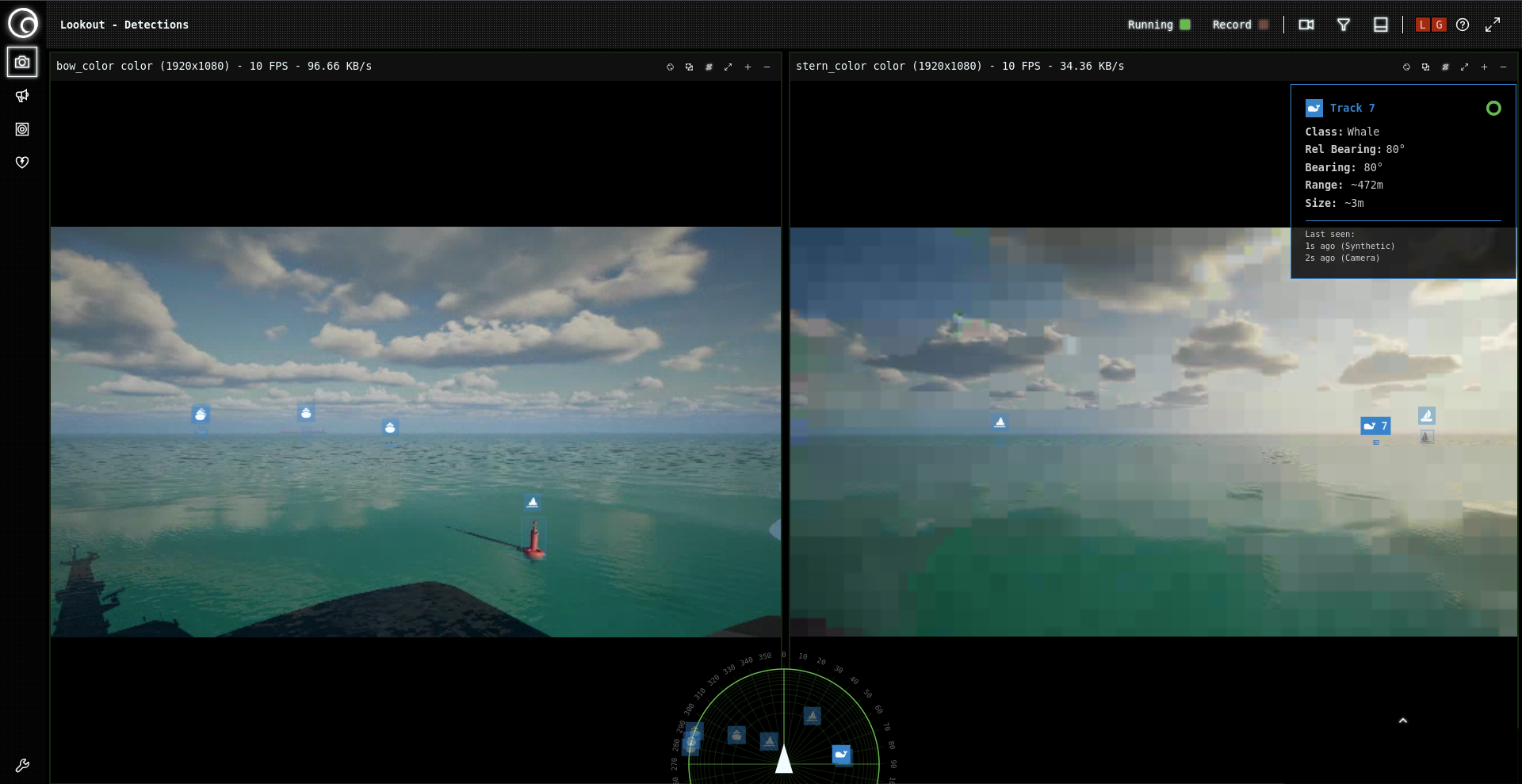
Calibration Requirements by Version
Different Lookout+ versions have varying calibration complexity:
| Lookout+ Version | Calibration Complexity | Additional Requirements |
|---|---|---|
| Assist | Basic intrinsic + relative positioning | Camera field of view and mounting angles |
| Augment | Moderate precision with absolute reference | GPS and compass integration for absolute positioning |
| Nav | High-precision multi-sensor fusion | INS integration with sub-degree accuracy requirements |
When to Contact Greenroom
Mandatory Greenroom Contact Situations
Camera Hardware Changes:
- Camera replacement or upgrade
- Lens changes or modifications
- Camera housing or mounting modifications
Position/Angle Modifications:
- Any change to camera mounting position
- Adjustment of camera pointing angles
- Modification of camera support structures
System Integration Changes (Lookout+ Nav):
- INS hardware replacement or repositioning
- Changes to INS mounting or orientation
- Updates to high-precision navigation systems
Calibration Process
Professional Calibration Workflow
Greenroom engineers follow a systematic process:
- Pre-Calibration Survey: Measure physical camera positions and orientations
- Intrinsic Calibration: Determine optical characteristics using specialized targets
- Extrinsic Calibration: Establish spatial relationships within vessel coordinate system
- Integration Testing: Verify accuracy with known reference objects
- Performance Validation: Test across operational conditions and ranges
Quality Assurance
- Accuracy Verification: Measurements against known targets
- Cross-Validation: Multiple measurement techniques for consistency
- Environmental Testing: Performance verification across conditions
- Documentation: Complete calibration records for future reference
Maintaining Calibration
Regular Monitoring
While users cannot modify calibration, monitoring system performance helps identify when recalibration may be needed:
- Detection Accuracy: Monitor for consistent object size and position estimates
- Cross-Camera Consistency: Verify objects appear correctly across multiple camera views
- Range Accuracy: Check distance measurements against known references (Lookout+ Nav)
Signs Requiring Recalibration
Contact Greenroom if you observe:
- Inconsistent Measurements: Objects appearing different sizes in similar conditions
- Alignment Issues: Objects not tracking smoothly between camera boundaries
- Range Errors: Distance measurements consistently off by significant amounts
- Geometric Distortion: Straight lines appearing curved or objects appearing distorted
Preventive Measures
- Protect Calibration: Avoid impacts to camera mounts or housing
- Stable Mounting: Ensure camera supports remain rigid and vibration-free
- Environmental Protection: Shield cameras from extreme conditions when possible
- Regular Inspection: Check for physical damage or mounting changes
Camera calibration is fundamental to Lookout+ accuracy. Never attempt modifications without Greenroom engineer involvement. Improper changes can significantly degrade system performance and safety.
- Document Changes: Note any physical modifications to camera installations
- Monitor Performance: Watch for calibration-related issues during operations
- Plan Maintenance: Schedule calibration reviews during vessel maintenance periods
- Contact Early: Reach out to Greenroom at first sign of calibration issues